Spicy Miso Glazed Eggplant Bowls - These spicy miso glazed eggplant bowls are silky and tender with caramelized edges that soak up a glossy, savory-sweet sauce. The flavor is deeply umami from miso, warmed by ginger and garlic, with a gentle heat that lingers without overwhelming the dish. Roasted eggplant becomes almost creamy inside, while the glaze turns sticky and bold, creating a satisfying contrast with crisp cucumbers and fluffy rice. It’s a colorful, weeknight-friendly vegetarian bowl that tastes layered and restaurant-style without requiring complicated techniques.
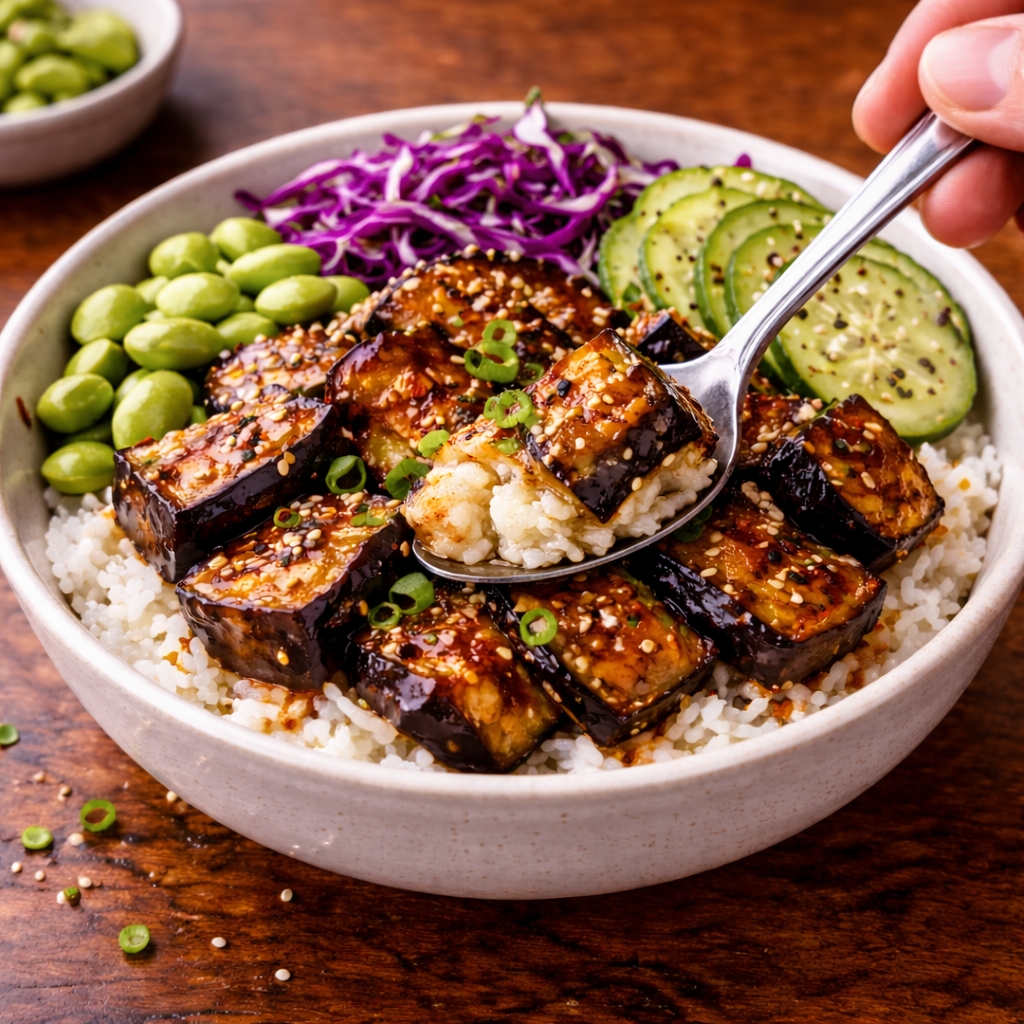
Spicy Miso Glazed Eggplant Bowls - Eggplant can be tricky because it swings between spongy and mushy, but the solution is salt, heat, and timing. Salting draws out excess moisture and helps the flesh soften evenly without turning watery, while high-heat roasting concentrates flavor and creates browned edges that hold the glaze. After testing different cuts, I found that thick half-moons or chunky cubes roast best for bowls: they get caramelized on the outside but stay creamy inside. The glaze is built like a fast, sturdy sauce—miso for umami, a touch of sweetness for caramelization, rice vinegar for brightness, and a little gochujang for heat and body. I whisk the glaze with warm water to loosen it, then brush it on in two stages: once mid-roast and once at the end. That two-phase glazing is the difference maker because it prevents scorching while building a sticky, lacquered finish. This shows how basic ingredients create something special: eggplant transforms when you manage moisture and roast aggressively, and the sauce tastes complex because the balance is intentional. The method is straightforward but delivers professional results, and it aligns with my focus on technique over complexity—simple steps like salting, high heat, and staged glazing make certain the bowl tastes bold, glossy, and satisfying every single time.
Dietary Notes
- ✓ Vegetarian Weeknight Bowl
- ✓ Sticky Umami Glaze
- ✓ Colorful Toppings
- ✓ Meal-Prep Friendly
♥
Why You'll Love This
- Silky Eggplant Texture: Salting and high-heat roasting create creamy centers with caramelized edges.
- Bold, Balanced Sauce: Miso, vinegar, and gochujang build flavor that tastes savory, sweet, and spicy.
- Customizable Bowl Format: Add tofu, edamame, or extra veggies without changing the core method.
- Quick, Reliable Cooking: Staged glazing prevents burning and guarantees a glossy finish in under 45 minutes.
Spicy Miso Glazed Eggplant Bowls
👩🍳 Author: Abderrahmane
⏰ Prep Time: 20min
❄️ Cool Time: 0
🔥 Cook Time: 25min
🥨 Yield: 4
🍞 Method: Roasting
🌾 Diet: Vegetarian
★
★
★
★
★
Leave a review
1x
2x
3x
Ingredients
- 2 medium (about 1 1/2 lb / 680 g) eggplant, cut into 1 1/2-inch chunks
- 1 1/2 tsp, divided fine salt
- 3 tbsp neutral oil (avocado or canola)
- 3 tbsp white miso paste
- 1 tbsp soy sauce
- 2 tbsp maple syrup (or honey)
- 1 1/2 tbsp rice vinegar
- 1 1/2 tbsp gochujang
- 2 tsp fresh ginger, grated
- 2 cloves garlic, minced
- 2–3 tbsp warm water
- 3 cups cooked jasmine rice
- 1 English cucumber, thinly sliced
- 1 large carrot, shredded
- 2 scallions, sliced
- 1 tbsp toasted sesame seeds
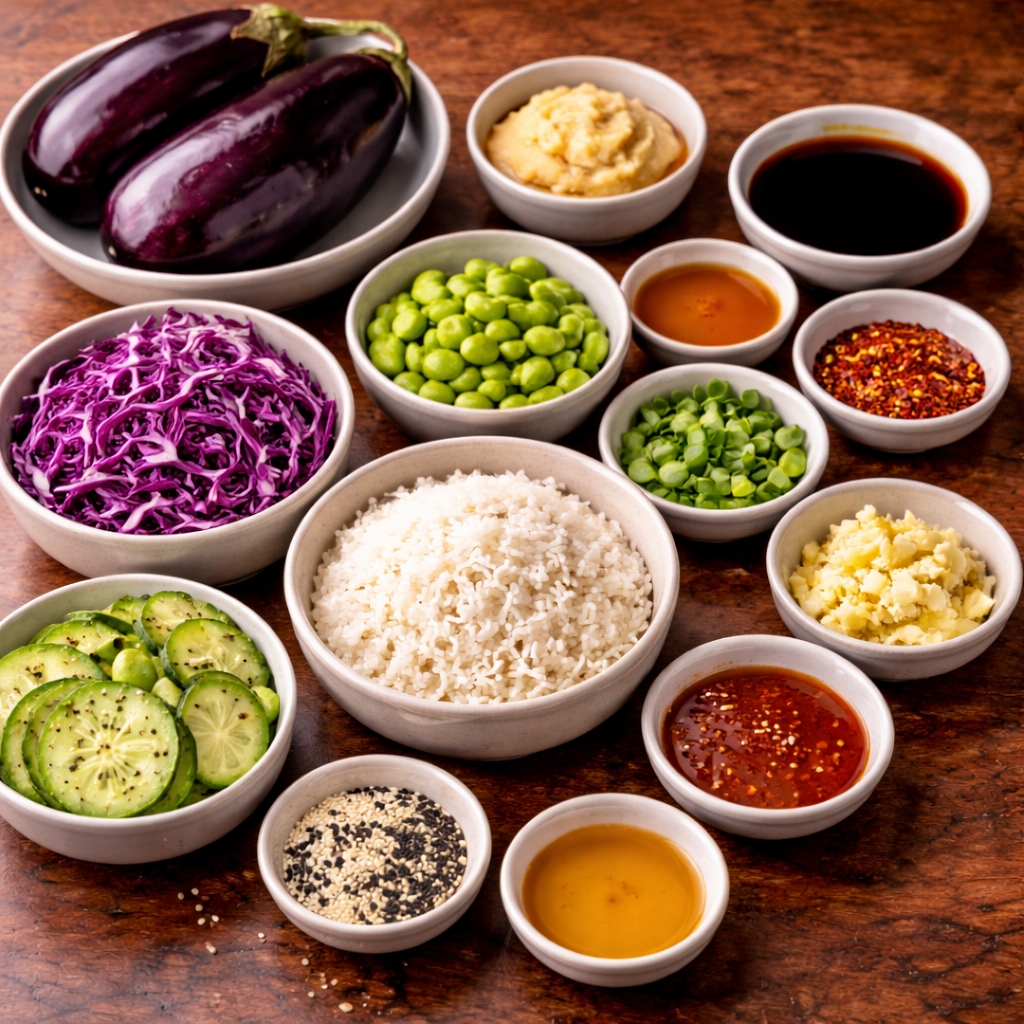
Ingredient Notes:
- eggplant, cut into 1 1/2-inch chunks Cut eggplant into larger chunks so the exterior caramelizes while the inside turns creamy and tender; smaller pieces can dry out before the glaze turns sticky.
- fine salt Salt draws out moisture and reduces bitterness; drying the surface helps the eggplant roast at high heat with browned edges instead of a watery, steamed texture.
- neutral oil (avocado or canola) Use a neutral oil with a higher smoke point for roasting; it supports crisp, caramelized edges and prevents sticking when the glaze goes on.
- white miso paste White miso provides deep umami and a gentle sweetness; whisk it smooth so it emulsifies into the glaze and coats the eggplant evenly.
- soy sauce Soy sauce builds savory backbone and adds salt; it helps the glaze taste bold and restaurant-style, especially against mild eggplant.
- maple syrup (or honey) Sweetener is what makes the glaze sticky and glossy; apply it in stages so it caramelizes without burning and creates that lacquered finish.
- rice vinegar Rice vinegar brightens the sauce and keeps it clean; it balances miso richness and helps the bowl taste sharp and lively rather than heavy.
- gochujang Gochujang adds spicy depth and body; it thickens the glaze slightly so it clings, and the heat builds gradually instead of spiking harshly.
- fresh ginger, grated Ginger adds warm aroma and a fresh bite; grating releases juices that spread through the glaze for more even flavor in every roasted piece.
- garlic, minced Garlic builds savory depth; mixing it into the glaze protects it from burning compared to scattering it on the pan at the start of roasting.
- warm water Warm water loosens the glaze to a brushable consistency; it helps emulsify miso and prevents thick clumps so the coating stays smooth and glossy.
- cooked jasmine rice Hot rice absorbs the glaze and keeps the bowl satisfying; fluff it before serving so the texture stays light and not gummy.
- English cucumber, thinly sliced Cucumber adds crisp, cool contrast that offsets spicy, sticky eggplant; add it last so it stays crunchy and refreshing.
- carrot, shredded Shredded carrot brings color and crunch; it keeps the bowl lively and balances the soft, creamy texture of roasted eggplant.
- scallions, sliced Scallions add fresh bite and aroma; sprinkle at the end so they stay bright and don’t wilt against the hot glaze.
- toasted sesame seeds Toasted sesame seeds add nutty crunch and finish; the aroma makes the glaze taste deeper and more layered with almost no extra work.
Instructions
-
1Step 1: Preheat the oven to 450°F (232°C) and line a sheet pan with parchment - high heat drives off moisture fast for caramelized edges.
-
2Step 2: Toss eggplant with 1 tsp salt and let sit 10 minutes, then pat dry - salting pulls water so the surface roasts instead of steaming.
-
3Step 3: Toss eggplant with oil and spread in a single layer - spacing prevents crowding so the pieces brown and turn tender, not soggy.
-
4Step 4: Roast 15 minutes, flipping once halfway, until edges start to brown - early browning builds flavor and gives the glaze something to cling to.
-
5Step 5: Whisk miso, soy sauce, maple syrup, rice vinegar, gochujang, ginger, garlic, and warm water until smooth - a loosened glaze brushes evenly and emulsifies well.
-
6Step 6: Brush half the glaze over the eggplant and roast 6 minutes - staged glazing builds sticky coating without scorching the sweet elements.
-
7Step 7: Brush remaining glaze and roast 4–6 minutes until deeply caramelized and tender - the final pass creates a glossy, lacquered finish.
-
8Step 8: Assemble bowls with hot rice, then top with glazed eggplant - the warm base absorbs sauce and keeps the bowl satisfying.
-
9Step 9: Add cucumber, shredded carrot, and scallions - cool, crisp toppings balance the silky eggplant and spicy glaze.
-
10Step 10: Finish with sesame seeds and serve immediately - sesame adds nutty crunch that completes the restaurant-style texture contrast.
Nutrition Facts
Calories 520
Protein 12g
Carbs 82g
Fiber 10g
Sugar 16g
Fat 16g
Sodium 980mg
Potassium N/A
Serving Suggestions
Serve these bowls warm with the eggplant freshly glazed so the sauce is sticky and glossy. Spoon eggplant over steamed rice, then add cool cucumber, shredded carrots, and scallions for crisp contrast and bright color. Finish with sesame seeds and a drizzle of extra glaze or a small splash of rice vinegar if you want a sharper bite. For the best texture balance, keep the crunchy toppings chilled and add them at the last second so the bowl stays lively rather than soft all the way through.
How to Store?
Store the roasted eggplant and rice separately in airtight containers in the refrigerator for up to 4 days; keeping components separate prevents the eggplant from making the rice soggy. Reheat eggplant in a 400°F (205°C) oven for 6–8 minutes to bring back caramelized edges, or microwave gently if you prefer speed, then brush with a spoon of leftover glaze to refresh the shine. The glaze can be made up to 7 days ahead and kept refrigerated; whisk with a splash of warm water if it thickens. Freezing is not ideal for eggplant bowls because thawing can make the texture watery, but you can freeze the rice for up to 2 months and build fresh bowls with newly roasted eggplant when needed.
If you enjoyed this Spicy Miso Glazed Eggplant Bowls or any other recipe on my blog,
please leave a ⭐ star rating and let me know how it went
in the comments below. I appreciate you taking time to read about this recipe, thank you!

Leave a Comment