Lemon Garlic Shrimp Orzo - This lemon garlic shrimp orzo cooks up creamy and glossy, with tender orzo that clings to a bright, buttery sauce and shrimp that stay juicy and snappy. The flavor balance is clean and bold: citrusy lemon cuts through rich olive oil and butter, garlic builds savory depth, and a little parmesan adds a salty finish without weighing the dish down. You get a satisfying texture contrast from the silky pasta, plump shrimp, and fresh herbs that keep every bite lively. It’s a fast, one-pan style dinner that tastes restaurant-style while staying weeknight-friendly and simple to pull off.
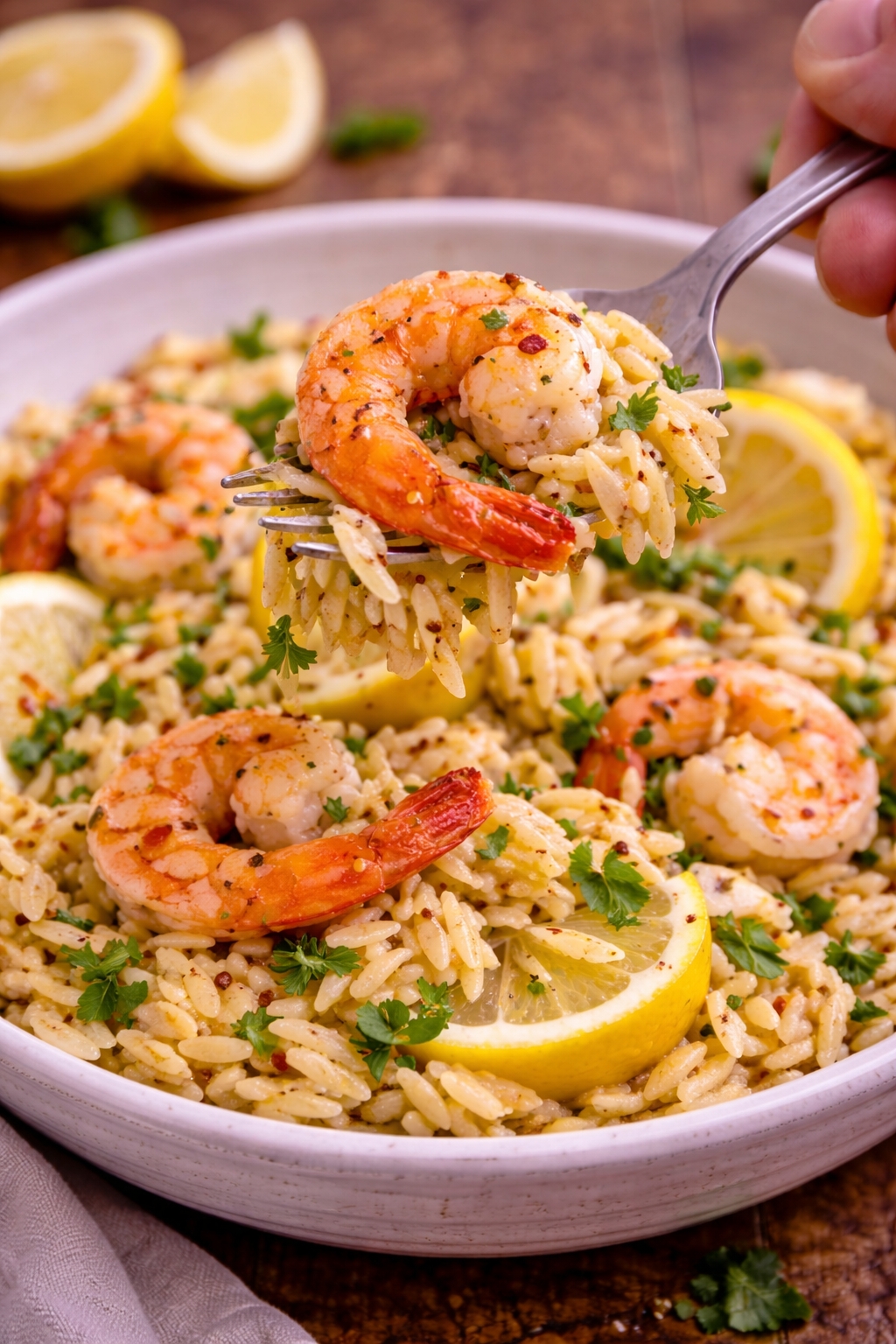
Lemon Garlic Shrimp Orzo - Orzo turns creamy when you treat it like a quick risotto: you toast it briefly, then let it simmer in flavorful liquid so the starch emulsifies into a velvety sauce. After testing, I found the biggest upgrade is controlling the shrimp cook. Shrimp goes from tender to rubbery fast, so the method is: sear shrimp quickly, remove it, build the sauce with garlic and lemon, then finish the orzo and fold the shrimp back in at the end. That sequence guarantees the shrimp stays tender while the pasta develops a silky, glossy texture. Toasting the orzo in the pan before adding broth builds flavor the same way you would for rice, and deglazing with lemon juice lifts any browned bits so the sauce tastes brighter and more layered. I keep the liquid addition measured so the orzo simmers rather than boils violently; a gentle simmer helps the starch release steadily, which is what makes the sauce creamy without cream. This shows how basic ingredients create something special: butter, lemon, garlic, and broth become a cohesive sauce when you emulsify them with pasta starch. The method is straightforward but delivers professional results, and it aligns with my focus on technique over complexity—small choices like when to add lemon, how hot to simmer, and when to return the shrimp make certain the dish stays juicy, glossy, and balanced instead of watery or overcooked.
Dietary Notes
- ✓ One-Pan Weeknight Dinner
- ✓ Bright Lemon Finish
- ✓ Creamy No-Cream Sauce
- ✓ Fast Cleanup
♥
Why You'll Love This
- Tender Shrimp, Guaranteed: Quick sear then finish at the end keeps shrimp juicy, not rubbery.
- Velvety Orzo Texture: Gentle simmer releases starch for a creamy, glossy sauce without heavy cream.
- Balanced Flavor Build: Garlic, lemon, and parmesan create savory richness with a fresh, clean finish.
- Quick & Easy Comfort: Big flavor in under 45 minutes with simple ingredients and minimal dishes.
Lemon Garlic Shrimp Orzo
👩🍳 Author: Abderrahmane
⏰ Prep Time: 15min
❄️ Cool Time: 5
🔥 Cook Time: 25min
🥨 Yield: 4
🍞 Method: Simmering
🌾 Diet: None
★
★
★
★
★
Leave a review
1x
2x
3x
Ingredients
- 1 lb (450 g) large shrimp, peeled and deveined
- 1 tsp, divided fine salt
- 1/2 tsp black pepper
- 2 tbsp olive oil
- 2 tbsp unsalted butter
- 4 cloves garlic, minced
- 1 1/2 cups (300 g) orzo pasta
- 3 1/2 cups (830 ml) chicken broth (or seafood broth)
- 3 tbsp lemon juice, freshly squeezed
- 1 tsp lemon zest
- 1/3 cup (30 g) parmesan, finely grated
- 1/4 cup fresh parsley, chopped
- 1/4 tsp red pepper flakes (optional)
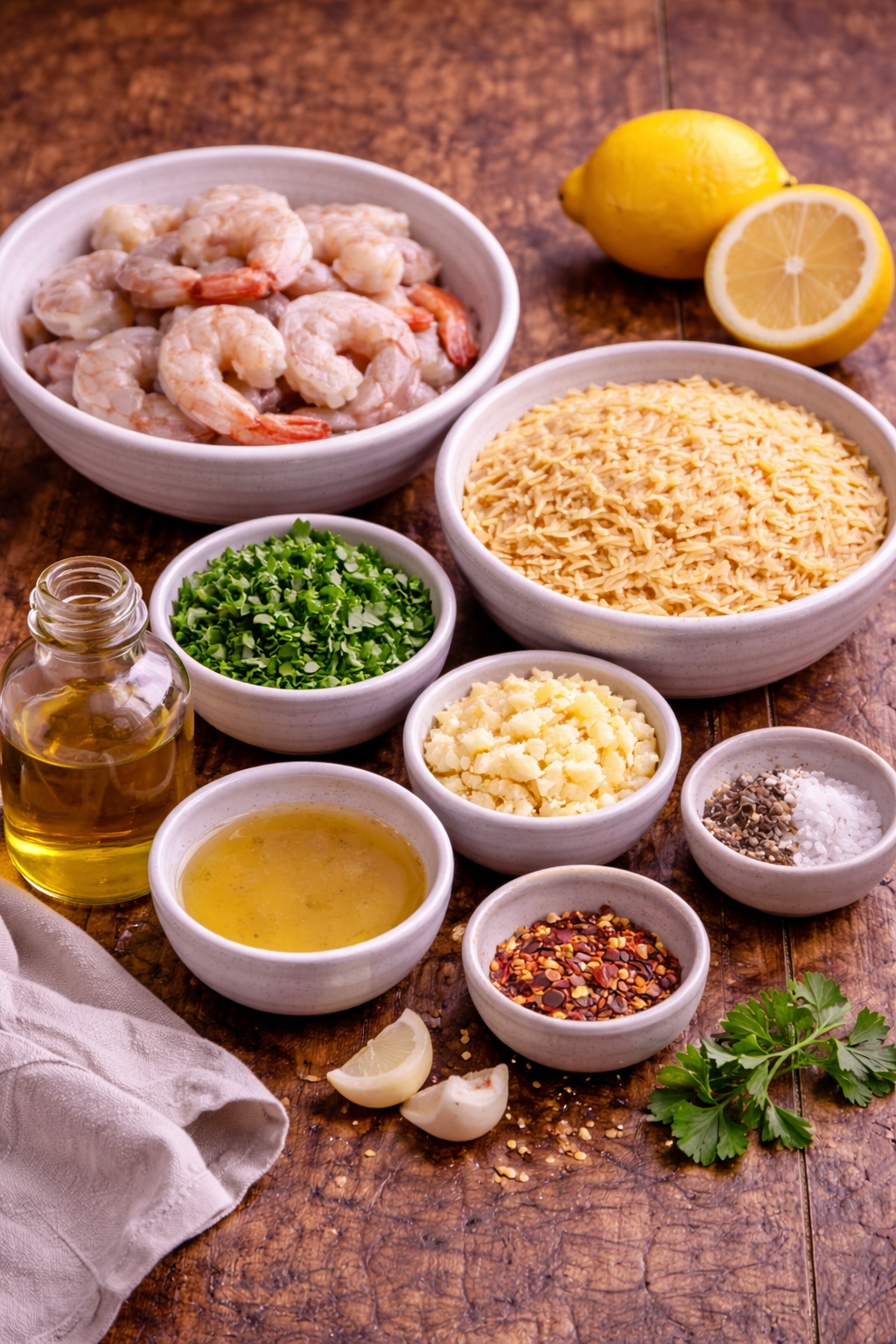
Ingredient Notes:
- large shrimp, peeled and deveined Pat shrimp very dry so it sears fast; high heat creates a quick crust and keeps the inside tender and juicy rather than rubbery in a weeknight dinner.
- fine salt Season shrimp and the simmering liquid in stages; layered salting builds flavor and prevents the final dish from tasting flat even with bright lemon.
- black pepper Pepper adds gentle heat that balances rich butter; add it early for mellow warmth, and finish with a pinch more if you want a sharper bite.
- olive oil Olive oil supports searing and helps build a glossy sauce base; it also prevents butter from browning too fast when the garlic goes in.
- unsalted butter Butter adds richness and helps emulsify with pasta starch; it turns broth into a creamy, velvety sauce without needing heavy cream.
- garlic, minced Minced garlic cooks quickly, so keep the heat moderate; fragrant garlic builds flavor, but browned garlic can taste bitter and dull the lemon.
- orzo pasta Toast orzo briefly, then simmer gently; stirring releases starch that thickens the sauce for a creamy, restaurant-style texture.
- chicken broth (or seafood broth) Use broth you like the taste of because the orzo absorbs it; a gentle simmer, not a hard boil, guarantees even cooking and a smooth sauce.
- lemon juice, freshly squeezed Add lemon juice near the end so it stays bright and acidic; early lemon can taste muted after simmering and won’t lift the finished sauce as well.
- lemon zest Zest at the end for aroma; it gives a fresh citrus pop that makes the dish taste lighter and more balanced against butter and parmesan.
- parmesan, finely grated Finely grated parmesan melts smoothly and thickens the sauce; add off direct high heat to prevent clumping and keep the texture velvety.
- fresh parsley, chopped Parsley brings fresh contrast and color; sprinkle at the end so it stays bright and keeps the bowl from tasting heavy.
- red pepper flakes (optional) A small pinch adds warm heat that lingers; it pairs well with lemon and garlic and makes the sauce taste more layered without overpowering shrimp.
Instructions
-
1Step 1: Pat shrimp dry, then season with half the salt and pepper - dry shrimp sears quickly, giving juicy texture instead of steaming.
-
2Step 2: Heat الزيت/olive oil in a large skillet over medium-high and sear shrimp 60–90 seconds per side until just pink, then remove - quick cooking prevents rubbery shrimp and keeps it tender.
-
3Step 3: Reduce heat to medium, add butter and garlic, and cook 30–45 seconds until fragrant - gentle heat develops flavor without burning the garlic.
-
4Step 4: Stir in orzo and toast 1–2 minutes until lightly glossy - toasting builds flavor and helps the pasta cook evenly.
-
5Step 5: Pour in broth and remaining salt, scraping up browned bits, then bring to a gentle simmer - deglazing lifts flavor while a simmer releases starch for a creamy sauce.
-
6Step 6: Simmer 10–12 minutes, stirring often, until orzo is tender and the liquid looks thick and glossy - stirring encourages emulsification for a velvety, no-cream finish.
-
7Step 7: Stir in lemon juice, parmesan, and red pepper flakes (if using) - adding lemon late keeps it bright, and parmesan thickens the sauce.
-
8Step 8: Return shrimp to the pan and cook 1–2 minutes until warmed through - finishing at the end guarantees tender shrimp, not overcooked.
-
9Step 9: Rest 5 minutes, then finish with parsley and lemon zest - a short rest tightens the sauce and the herbs keep the flavor fresh.
Nutrition Facts
Calories 560
Protein 40g
Carbs 62g
Fiber 3g
Sugar 3g
Fat 18g
Sodium 920mg
Potassium N/A
Serving Suggestions
Serve shrimp orzo hot while the sauce is glossy and the shrimp is just tender. For a clean plate, spoon the orzo into shallow bowls, arrange the shrimp on top, then finish with lemon zest, chopped parsley, and a little extra parmesan for a salty edge. Pair it with a crisp green salad or roasted asparagus for freshness, and add a few chili flakes if you like gentle heat. This dish tastes best right after cooking when the orzo is creamy; if it sits, loosen with a splash of warm broth before serving to bring back the velvety texture.
How to Store?
Store leftovers in an airtight container in the refrigerator for up to 3 days. Reheat gently on the stove with a splash of broth or water, stirring until the sauce loosens and turns creamy again; this prevents the orzo from drying out. Microwave reheating works in short bursts, but stir between intervals and add a spoon of liquid to avoid hot spots that overcook the shrimp. Freezing is not ideal because shrimp can turn tough and the orzo texture can become grainy, but if needed, freeze up to 1 month and thaw overnight in the fridge, then reheat slowly with extra broth. For make-ahead, prep the garlic, lemon, and herbs in advance, and keep shrimp peeled and patted dry so the cooking stays fast and consistent.
If you enjoyed this Lemon Garlic Shrimp Orzo or any other recipe on my blog,
please leave a ⭐ star rating and let me know how it went
in the comments below. I appreciate you taking time to read about this recipe, thank you!



Leave a Comment