French Onion Soup Pot Pie - This French onion soup pot pie delivers sweet, deeply caramelized onions in a glossy, savory broth tucked under a crisp, flaky crust that bakes golden and shatters at the edges. The filling is rich and velvety with a gentle savory tang, balanced by thyme and black pepper, while melted Gruyère adds creamy, stretchy comfort in every spoonful. You get the cozy warmth of soup with the satisfying bite of pastry, making it feel both familiar and special. It is an excellent make-ahead dinner because the onion base can be cooked ahead and the pie bakes beautifully when you are ready to serve.
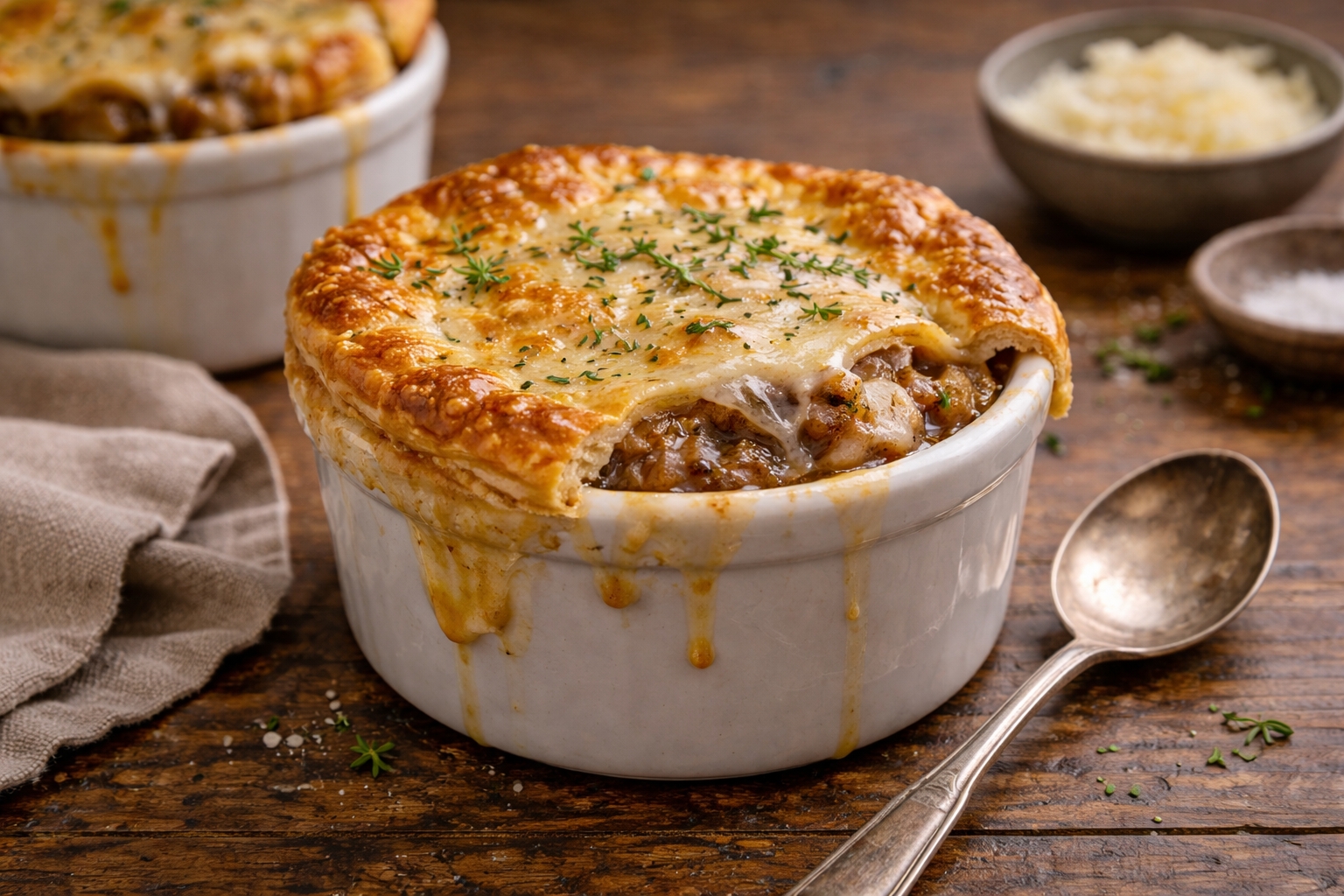
French Onion Soup Pot Pie - This recipe works because it respects the real technique of French onion soup—caramelization—while making the crust a functional lid rather than a soggy afterthought. Onions need time and steady heat to caramelize; rushing them gives you browned edges but not the deep sweetness and savory complexity that defines the dish. After testing different timelines, I found that cooking the onions low and slow with a small amount of butter and oil creates better caramelize results and reduces the chance of burning, especially if your pan runs hot. Deglaze is the key move: once a brown fond forms, a splash of stock loosens it and dissolves those concentrated flavors back into the onions, building a broth that tastes restaurant-style without extra ingredients. The filling should be simmered until it looks glossy and slightly reduced; too thin and it will bubble excessively and soak the pastry. A small amount of flour in the onion base gives the broth just enough body to stay velvety and spoonable without turning into gravy. For the crust, cold butter and minimal mixing create flaky layers, and baking the pot pie hot enough guarantees a crisp top before the filling can steam it soft. This shows how basic ingredients create something special: onions, stock, herbs, and cheese become a deeply satisfying meal once the technique is in place. The method is straightforward but delivers professional results because you are following cues you can see—onions that turn deep amber, broth that coats a spoon, and a crust that turns bronze while the edges bubble slowly. This aligns with my focus on technique over complexity: take the time to caramelize properly, use deglaze to build flavor, and bake until the filling bubbles thickly so the final pot pie tastes rich, balanced, and clean instead of watery or burnt.
Dietary Notes
- ✓ Comfort-Food Twist
- ✓ Make-Ahead Friendly
- ✓ Deep Caramelized Onions
- ✓ Crisp Flaky Crust
♥
Why You'll Love This
- True Onion Depth: Slow caramelization and deglazing build rich flavor without shortcuts.
- Velvety Broth Texture: Light thickening keeps the filling spoonable and not watery.
- Crisp Pastry Lid: High-heat baking guarantees a golden crust that stays flaky.
- Dinner-Party Ready: Familiar soup flavors transformed into a sliceable, impressive bake.
French Onion Soup Pot Pie
👩🍳 Author: Abderrahmane
⏰ Prep Time: 20min
❄️ Cool Time: 15
🔥 Cook Time: 80min
🥨 Yield: 6
🍞 Method: Baking
🌾 Diet: Vegetarian
★
★
★
★
★
Leave a review
1x
2x
3x
Ingredients
- 2 1/2 cups all-purpose flour
- 1 tsp fine sea salt
- 1 cup (2 sticks) unsalted butter, very cold and cubed
- 6 to 8 tbsp ice water
- 3 lb (about 5 large) yellow onions, thinly sliced
- 2 tbsp olive oil
- 3 tbsp unsalted butter
- 2 tbsp all-purpose flour
- 3 cups beef stock or vegetable stock
- 1 1/2 tsp fresh thyme leaves
- 1 bay leaf
- 1 1/2 cups Gruyère cheese, grated
- 1 tsp fine sea salt
- 3/4 tsp black pepper
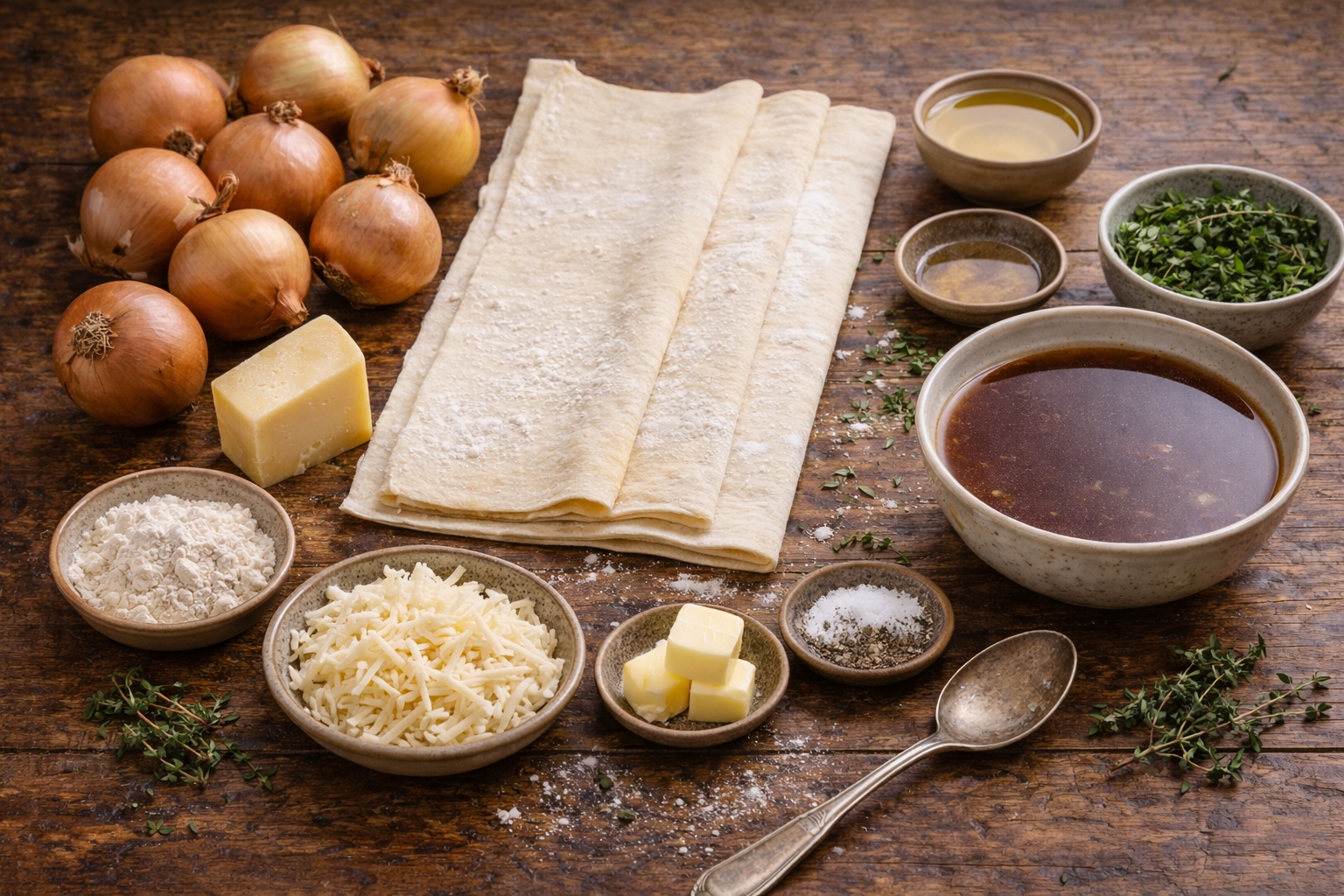
Ingredient Notes:
- all-purpose flour Measure flour lightly so the crust stays tender and flakes instead of turning dense. Once water is added, mix only until the dough holds together to avoid developing gluten.
- fine sea salt Salt seasons the pastry so it tastes balanced against the rich onion filling. Mix it into the flour so the flavor is evenly distributed throughout the crust.
- unsalted butter, very cold and cubed Keep butter very cold so it stays in distinct pieces that melt into steam pockets, creating flaky layers. If the dough warms, chill it so the butter does not smear and reduce lift.
- ice water Add ice water gradually so the dough hydrates without becoming sticky. Controlled hydration prevents overworking and supports a crisp, flaky finish.
- yellow onions, thinly sliced Slice onions evenly so they caramelize at the same rate and turn jammy without burning. Slow caramelize is the main technique here; rushing leads to sharp onion flavor instead of deep sweetness.
- olive oil Olive oil raises the fat smoke point so the onions can cook longer without the butter burning. This helps develop flavor steadily and keeps the caramelization clean, not bitter.
- unsalted butter Butter adds richness and helps onions turn silky as they cook. Keep heat moderate so it browns gently without scorching, which can make the filling taste harsh.
- all-purpose flour A small amount of flour thickens the broth just enough to become velvety and spoonable. Cook it briefly on the onions so it loses raw taste before adding stock.
- beef stock or vegetable stock Use low-sodium stock so you can season precisely, then add it gradually while scraping to deglaze the pan. Deglazing dissolves fond into the broth, building restaurant-style depth.
- fresh thyme leaves Thyme adds herbal warmth that complements caramelized onions and cheese. Strip leaves from stems so the texture stays smooth in the filling.
- bay leaf Bay leaf gives subtle background flavor during simmering. Remove it before assembling so the flavor stays balanced and no one bites into the leaf.
- Gruyère cheese, grated Freshly grated Gruyère melts creamy and stretchy, creating that classic French onion finish. Add some into the broth for richness and reserve some for the top so you get cheese pull under the crust.
- fine sea salt Season in stages: a pinch during onion cooking and final adjustment after the stock reduces. This makes certain the filling tastes rich and balanced, not overly salty.
- black pepper Black pepper adds gentle bite that cuts through the creamy cheese and sweet onions. Add near the end so it stays aromatic instead of dull.
Instructions
-
1Step 1: Whisk flour and salt for the crust until evenly combined - this distributes seasoning for consistent pastry flavor.
-
2Step 2: Cut in cold butter until pea-size pieces remain - these butter pockets melt into steam and form flaky layers.
-
3Step 3: Add ice water gradually and mix just until the dough holds together - minimal mixing keeps the crust tender.
-
4Step 4: Wrap and chill the dough at least 30 minutes until firm - chilling keeps butter cold so the crust bakes crisp.
-
5Step 5: Cook onions with olive oil and butter over medium-low heat for 45 to 55 minutes, stirring often, until deep amber and jammy - slow caramelization builds the signature sweet-savory flavor.
-
6Step 6: Sprinkle flour over the onions and cook 1 minute until absorbed - cooking flour removes raw taste and adds body to the broth.
-
7Step 7: Add stock gradually while scraping the pan to deglaze browned bits, then add thyme and bay leaf and simmer 10 to 12 minutes until glossy and slightly reduced - deglazing dissolves concentrated flavor into a velvety base.
-
8Step 8: Remove bay leaf, stir in half the Gruyère until melted, then cool 10 minutes - cooling prevents steam from softening the pastry lid.
-
9Step 9: Pour filling into a baking dish, top with remaining Gruyère, cover with rolled pastry, crimp edges, and cut vents - vents release steam so the crust stays flaky.
-
10Step 10: Bake at 425°F for 20 minutes, then reduce to 400°F and bake 15 to 20 minutes until deeply golden and bubbling at the edges - high heat sets the crust quickly for crisp structure.
-
11Step 11: Rest 10 to 15 minutes before serving until bubbling slows - resting helps the broth thicken slightly for better spoonable texture.
Nutrition Facts
Calories 540
Protein 15g
Carbs 50g
Fiber 4g
Sugar 9g
Fat 32g
Sodium 980mg
Potassium N/A
Serving Suggestions
Serve the pot pie hot after a short rest so the broth thickens and the crust stays crisp, about 10 to 15 minutes out of the oven. For a clean portion, cut straight through the pastry lid with a sharp knife, then spoon the onion filling into bowls and top with a piece of crust for the best texture contrast. Pair with a bright green salad dressed with vinegar and olive oil to cut the richness, or serve alongside roasted broccoli for a warm, simple side. For the most dramatic presentation, crack the crust at the table so the steam and caramelized onion aroma comes up immediately.
How to Store?
Cool leftovers, then refrigerate in an airtight container for up to 4 days; the onion base thickens as it chills and reheats smoothly. Reheat in a 325°F oven for 20 to 25 minutes until hot, which restores crust crispness better than a microwave; if needed, cover loosely with foil so the top does not overbrown. This dish freezes best as filling only for up to 2 months; thaw overnight and bake with fresh or thawed pastry for the crispiest finish. For make-ahead hosting, caramelize the onions and finish the broth up to 2 days in advance, refrigerate, then assemble and bake when you are ready so the pastry stays flaky and the filling tastes freshly made.
If you enjoyed this French Onion Soup Pot Pie or any other recipe on my blog,
please leave a ⭐ star rating and let me know how it went
in the comments below. I appreciate you taking time to read about this recipe, thank you!

Leave a Comment