Spicy Peanut Noodles with Crunchy Vegetables - These noodles feature a rich, creamy peanut sauce with just the right amount of heat, tossed with crisp vegetables and tender noodles. The sauce clings to every strand, offering layers of savory, sweet, and spicy flavors in each bite. Ready in 25 minutes, this dish satisfies takeout cravings with fresher ingredients and customizable heat levels.
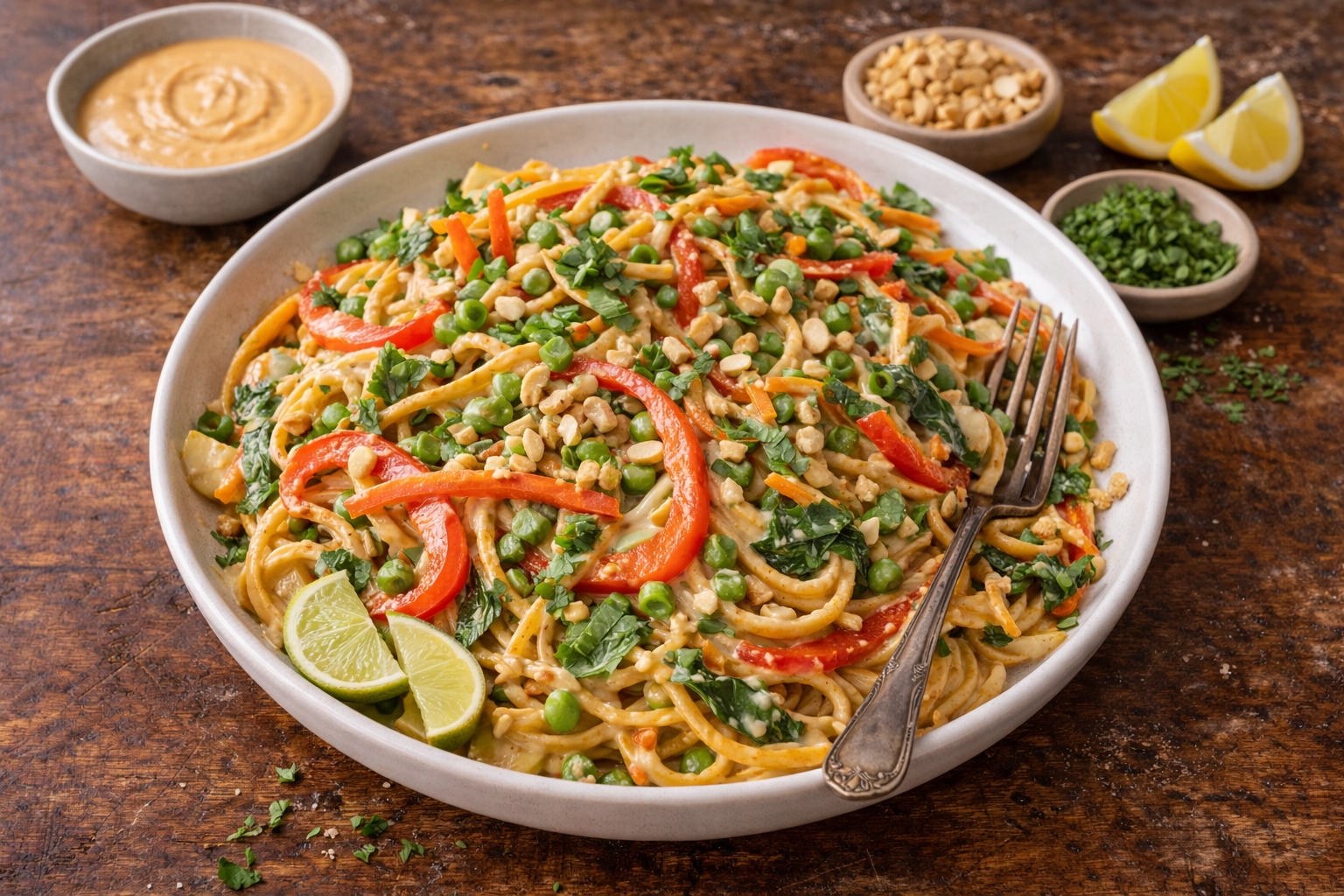
Spicy Peanut Noodles with Crunchy Vegetables - The sauce achieves its perfect consistency by using natural peanut butter as the base, which emulsifies beautifully with soy sauce, rice vinegar, and sesame oil. After testing, I found that thinning the sauce with hot pasta water creates a silky texture that coats the noodles evenly without being gloppy. The vegetables remain crisp-tender by being added raw, providing refreshing contrast to the rich sauce. This approach aligns with my philosophy that a well-balanced sauce can transform simple ingredients into a crave-worthy meal with minimal effort.
Dietary Notes
- ✓ 25-Minute Meal
- ✓ Vegetarian Protein
- ✓ Meal Prep Friendly
- ✓ Customizable Heat
♥
Why You'll Love This
- Addictive Sauce: The peanut sauce strikes perfect balance between creamy, savory, sweet, and spicy.
- Textural Harmony: Crunchy raw vegetables contrast with tender noodles for satisfying mouthfeel.
- Excellent Meal Prep: Noodles hold up well for days, making perfect work-from-home lunches.
- Endlessly Adaptable: Swap vegetables based on season or add protein like tofu or chicken.
Spicy Peanut Noodles with Crunchy Vegetables
👩🍳 Author: Abderrahmane
⏰ Prep Time: 15min
❄️ Cool Time: 0
🔥 Cook Time: 10min
🥨 Yield: 4
🍞 Method: Boiling
🌾 Diet: Vegetarian
★
★
★
★
★
Leave a review
1x
2x
3x
Ingredients
- 12 oz spaghetti or linguine
- ½ cup natural creamy peanut butter
- 3 tbsp soy sauce
- 2 tbsp rice vinegar
- 1 tbsp sesame oil
- 2 tbsp honey or maple syrup
- 1 tbsp fresh ginger, grated
- 2 garlic cloves, minced
- 1-2 tsp sriracha or chili garlic sauce
- 1 red bell pepper, thinly sliced
- 2 carrots, julienned
- 4 scallions, thinly sliced
- ½ cup cilantro, chopped
- for serving lime wedges
- ¼ cup roasted peanuts, chopped
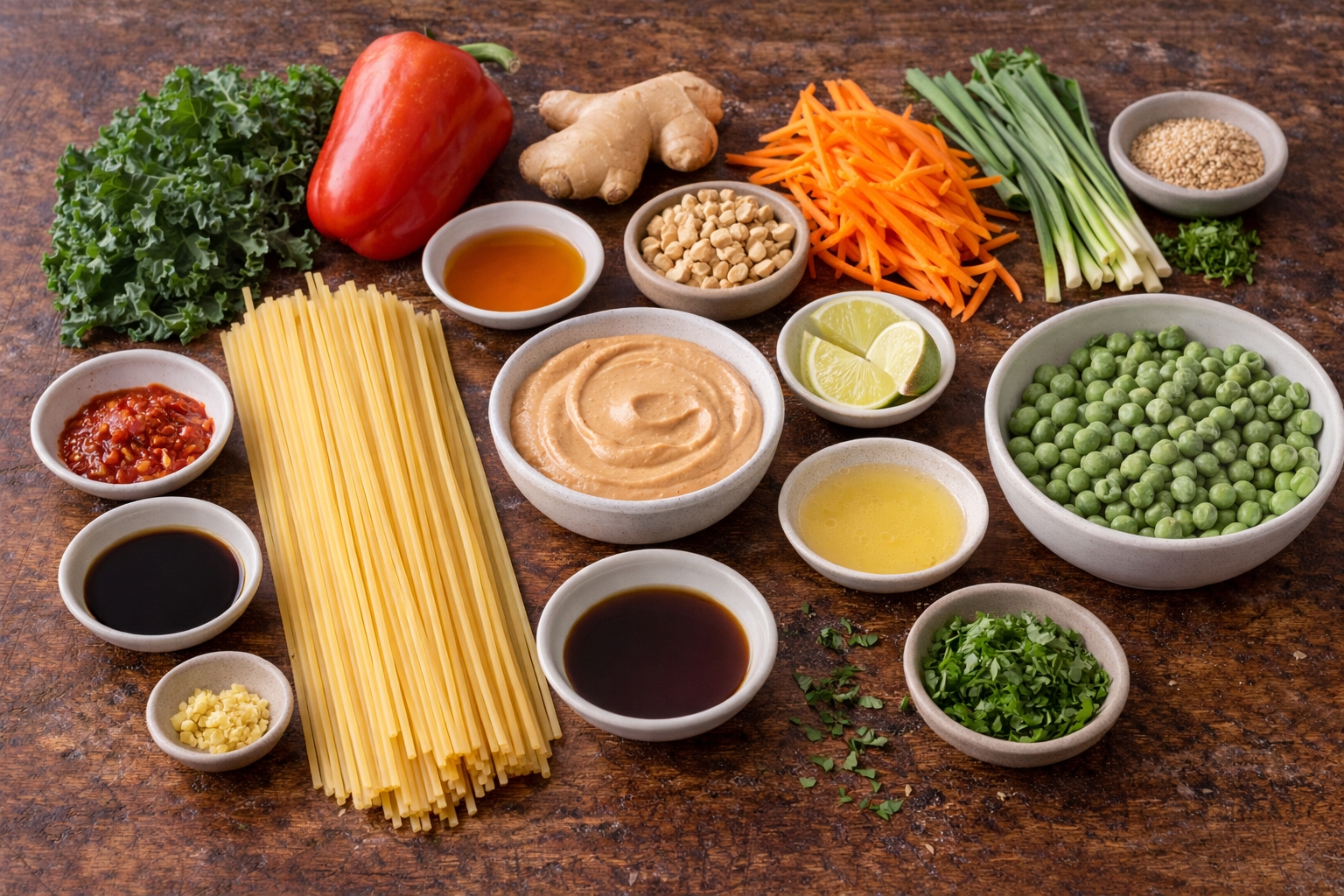
Ingredient Notes:
- spaghetti or linguine Long pasta shapes provide maximum surface area for the rich peanut sauce to cling to. Cooking it al dente ensures the noodles maintain texture and don't become mushy when tossed with the sauce and vegetables. For gluten-free options, rice noodles work beautifully and soak up the sauce well.
- natural creamy peanut butter Natural peanut butter (just peanuts and salt) creates a cleaner, more peanut-forward flavor than stabilised varieties with added oils and sugars. Stir it thoroughly before measuring to incorporate the separated oil—this ensures consistent sauce texture and proper emulsification.
- soy sauce Soy sauce provides the essential salty, umami foundation that balances the peanut butter's richness and the sweet elements. Using regular rather than low-sodium allows you to control saltiness better since you're not compensating for missing flavor. Tamari works perfectly for gluten-free needs.
- sesame oil Toasted sesame oil adds deep, nutty aroma that complements the peanut flavor without competing. It's potent, so a little goes a long way. Adding it to the sauce rather than cooking with it preserves its distinctive flavor, which can diminish with high heat.
- fresh ginger, grated Fresh ginger provides warm, spicy notes that cut through the richness of the peanut sauce. Grating it on a microplane releases its juices and ensures no fibrous pieces remain in the smooth sauce. Ginger's natural zing adds complexity that powdered ginger can't match.
- red bell pepper, thinly sliced Red bell pepper adds sweet crunch and vibrant color contrast to the brown sauce. Slicing it thinly ensures it's tender enough to bite through easily while still providing satisfying texture. The natural sweetness balances the spicy and savory elements of the dish.
- carrots, julienned Julienned carrots add both visual appeal and textural contrast. Their natural sweetness develops when briefly warmed by the hot noodles, and the matchstick shape ensures even distribution throughout the dish. A mandoline or julienne peeler makes quick work of this prep.
- scallions, thinly sliced Scallions provide mild onion flavor and fresh crunch. Using both white and green parts maximizes flavor—the whites add pungency to the sauce base while the greens add color and freshness as garnish. Cutting on a diagonal increases surface area for better distribution.
- cilantro, chopped Cilantro adds necessary herbal brightness that cuts through the rich sauce. If you're among those who taste soapy flavors with cilantro, fresh parsley or basil make excellent substitutes. Chop it just before adding to preserve its vibrant color and prevent wilting. Swap
- roasted peanuts, chopped Chopped peanuts provide essential crunch and reinforce the peanut flavor. Lightly toasting them before chopping enhances their nuttiness. The textural contrast they provide against the soft noodles and creamy sauce is a key element of this dish's appeal.
Instructions
-
1Step 1: Cook pasta in well-salted boiling water according to package directions until al dente - reserve 1 cup of pasta water before draining for sauce adjustment.
-
2Step 2: While pasta cooks, whisk together peanut butter, soy sauce, rice vinegar, sesame oil, and honey in a medium bowl - this creates the sauce base before thinning.
-
3Step 3: Heat a small skillet over medium heat and sauté minced garlic and grated ginger for 1 minute until fragrant - brief cooking removes raw edge without burning.
-
4Step 4: Add the garlic-ginger mixture to the peanut sauce along with sriracha - stir to incorporate the aromatic base evenly.
-
5Step 5: Gradually whisk in ½ cup of the reserved hot pasta water until the sauce reaches a creamy, pourable consistency - the starch helps emulsify the sauce.
-
6Step 6: Drain pasta and return to the pot, then immediately toss with the peanut sauce while still hot - the residual heat helps the sauce coat every strand.
-
7Step 7: Add sliced bell pepper, julienned carrots, and half the scallions to the pot - the residual heat will slightly soften the vegetables while maintaining crunch.
-
8Step 8: Toss everything together until vegetables are evenly distributed and coated with sauce - use tongs for best mixing without breaking noodles.
-
9Step 9: Transfer to a serving bowl and garnish with remaining scallions, cilantro, and chopped peanuts - the garnishes add fresh contrast and texture.
-
10Step 10: Serve with lime wedges on the side for squeezing over individual portions - the acid brightens the rich sauce perfectly.
Nutrition Facts
Calories 520
Protein 18g
Carbs 62g
Fiber 6g
Sugar 12g
Fat 24g
Sodium 850mg
Potassium N/A
Serving Suggestions
Serve at room temperature or slightly chilled for best texture. Garnish generously with chopped peanuts, cilantro, and lime wedges for added brightness. For family-style serving, present the noodles in a large bowl with garnishes on the side, allowing everyone to customize their portion. The flavors develop as they sit, making this dish ideal for potlucks or picnics where it won't be served immediately.
How to Store?
Store in an airtight container in the refrigerator for up to 5 days. The sauce may thicken when chilled—thin with a tablespoon of warm water and stir well before serving. These noodles do not freeze well as the vegetables lose their crisp texture. For make-ahead, prepare the sauce up to 3 days in advance and store separately, tossing with freshly cooked noodles and vegetables when ready to serve.
If you enjoyed this Spicy Peanut Noodles with Crunchy Vegetables or any other recipe on my blog,
please leave a ⭐ star rating and let me know how it went
in the comments below. I appreciate you taking time to read about this recipe, thank you!
Leave a Comment