Golden Harissa Roasted Cauliflower with Tahini - This dish delivers caramelized cauliflower florets with a vibrant orange glaze and a creamy, cooling tahini sauce. The harissa spice blend creates a smoky-sweet crust with a gentle heat, while the tahini drizzle adds a velvety, nutty contrast. Ready in under an hour, this recipe transforms a simple vegetable into a stunning centerpiece that pairs well with grains or stands alone.
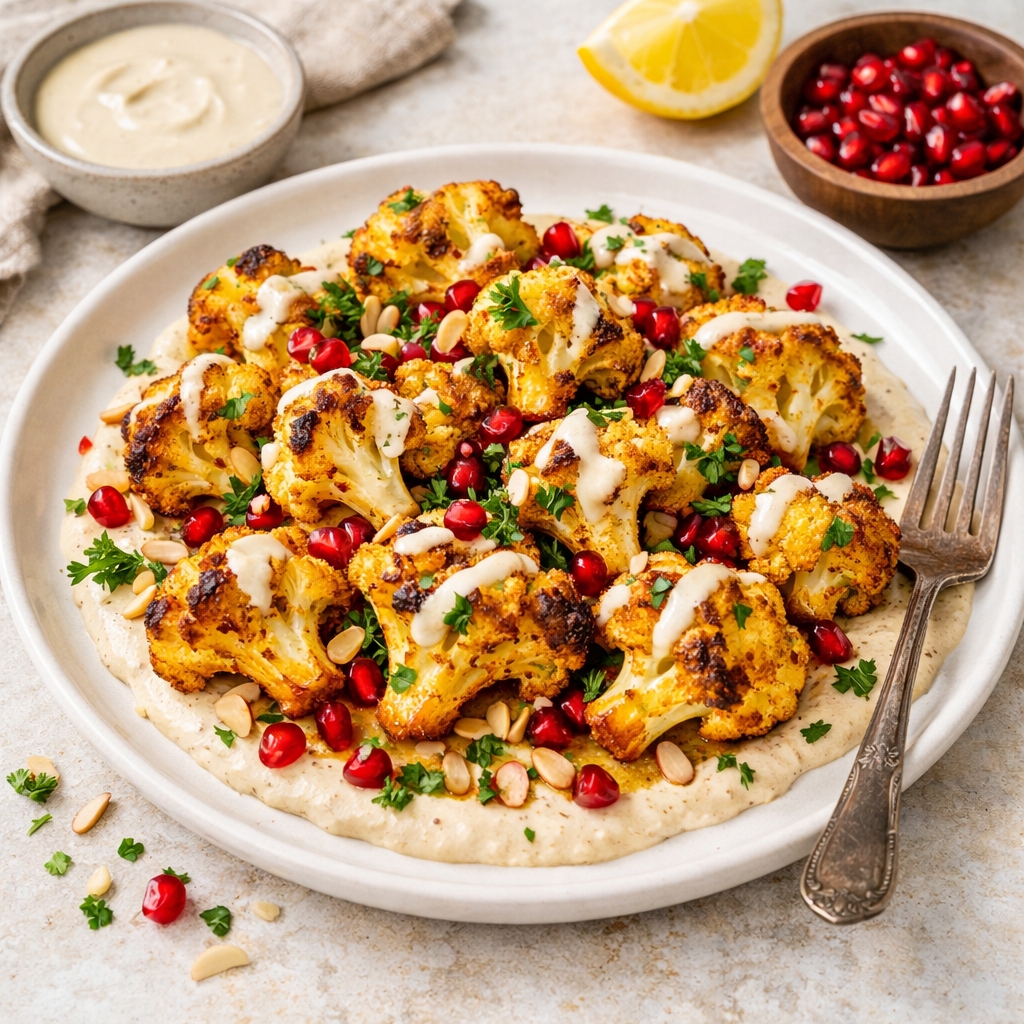
Golden Harissa Roasted Cauliflower with Tahini - This recipe works because roasting at high heat drives off moisture from the cauliflower, allowing the harissa-oil paste to cling and caramelize into a flavorful crust. After testing, I found that tossing the florets in the harissa mixture before roasting—rather than brushing—ensures even coverage and better browning. This approach aligns with my philosophy that a single, well-executed technique can elevate humble ingredients into something special. The tahini sauce, thinned with lemon juice and water, provides a necessary creamy counterpoint that balances the spice and richness.
Dietary Notes
- ✓ Vegan Option
- ✓ One-Pan Meal
- ✓ Make-Ahead Friendly
- ✓ Gluten-Free
♥
Why You'll Love This
- Bold Flavor Contrast: Smoky harissa caramelizes against creamy, cool tahini for a balanced bite.
- Simple Roasting Technique: High heat transforms cauliflower into tender-crisp perfection with minimal effort.
- Versatile Serving Options: Works as a warm main, a grain bowl topping, or a room-temperature side.
- Meal Prep Champion: The components hold well for days, making weekday lunches effortless.
Golden Harissa Roasted Cauliflower with Tahini
👩🍳 Author: Abderrahmane
⏰ Prep Time: 15min
❄️ Cool Time: 5
🔥 Cook Time: 35min
🥨 Yield: 4
🍞 Method: Roasting
🌾 Diet: Vegetarian
★
★
★
★
★
Leave a review
1x
2x
3x
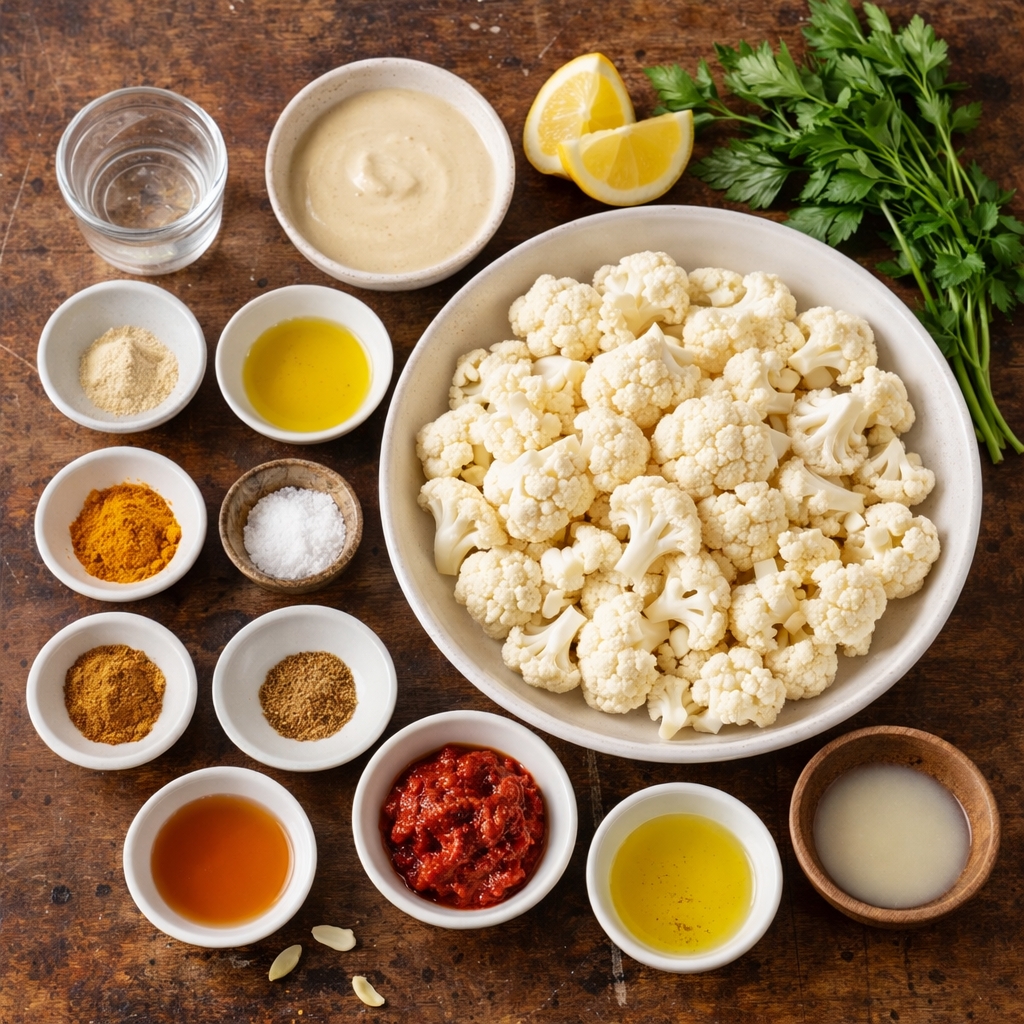
Ingredients
- 1 large head cauliflower
- 3 tbsp extra virgin olive oil
- 2 tbsp harissa paste
- 1 tsp ground turmeric
- 1 tsp ground cumin
- 1 tsp garlic powder
- 1 tsp kosher salt
- ½ cup tahini, well-stirred
- 3 tbsp fresh lemon juice
- 3-4 tbsp cold water
- 1 tsp maple syrup or honey
- ¼ cup fresh parsley, chopped
- 2 tbsp fresh mint, chopped
Ingredient Notes:
- large head cauliflower Cutting into uniform 1.5-inch florets is key for even roasting—smaller pieces burn, larger ones stay hard. The dry surface of the florets helps the spicy harissa paste cling and form a caramelized, restaurant-style crust during baking.
- extra virgin olive oil A good quality oil helps emulsify the harissa spice paste, ensuring it coats every floret evenly. It also conducts heat efficiently in the oven, promoting the Maillard reaction that creates deep, complex flavor and a satisfying crisp-tender texture.
- harissa paste This North African chili paste adds a smoky, fruity heat that mellows and sweetens as it roasts. For a weeknight-friendly shortcut, using a prepared paste builds layers of flavor faster than mixing individual dried spices from scratch.
- ground turmeric Beyond its vibrant golden color, turmeric adds a warm, earthy note that grounds the dish. Its flavor is fat-soluble, so mixing it with the oil first helps distribute its taste and color evenly throughout the cauliflower.
- ground cumin Toasting the cumin within the spice paste on the hot cauliflower unlocks its essential oils, enhancing its nutty, smoky aroma. This deepens the overall flavor profile and complements the earthiness of the roasted vegetable.
- garlic powder Using powder instead of fresh minced garlic prevents burning during the high-heat roasting, which can cause bitterness. It provides a consistent, mellow garlic flavor that permeates the dish without the risk of acrid notes.
- tahini, well-stirred Always stir the tahini jar thoroughly to reincorporate the separated oil—this guarantees a smooth, creamy sauce. Full-fat tahini gives the sauce a rich, velvety body that beautifully contrasts the crisp, spicy cauliflower.
- fresh lemon juice The acidity in lemon juice brightens the rich tahini and cuts through the spice. Adding it to the tahini first causes a temporary thickening, which is normal and makes it easier to control the final, drizzle-able consistency when adding water.
- cold water Cold water integrates more smoothly into the tahini-lemon mixture than warm water, preventing a grainy texture. Adding it slowly allows the emulsion to form properly, creating a stable, creamy sauce that won't separate.
- fresh parsley, chopped Adding fresh herbs at the end provides a necessary burst of freshness and color. The grassy flavor of parsley cuts through the richness of the dish, making each bite taste lively and balanced.
Instructions
-
1Step 1: Preheat your oven to 425°F (220°C) and line a large baking sheet with parchment paper - high heat is essential for achieving caramelized edges and tender interiors.
-
2Step 2: In a large bowl, whisk together the olive oil, harissa paste, turmeric, cumin, garlic powder, and salt until a smooth, vibrant paste forms - this ensures the spices are evenly distributed and will coat the cauliflower thoroughly.
-
3Step 3: Add the cauliflower florets to the bowl and use your hands or a spatula to toss and massage the paste onto every surface until evenly coated - this hands-on method guarantees maximum flavor adhesion.
-
4Step 4: Spread the coated florets in a single layer on the prepared baking sheet, ensuring they are not touching - proper spacing allows hot air to circulate for even roasting and crisping.
-
5Step 5: Roast for 30-35 minutes, flipping the florets halfway through, until deeply golden, caramelized at the edges, and tender when pierced with a fork - flipping promotes all-over browning and prevents burning.
-
6Step 6: While the cauliflower roasts, prepare the tahini sauce by whisking the tahini and lemon juice together in a medium bowl - the acid will initially thicken the tahini.
-
7Step 7: Gradually whisk in the cold water, one tablespoon at a time, until the sauce thins to a smooth, pourable consistency similar to heavy cream - adding water slowly prevents the sauce from breaking or becoming too thin.
-
8Step 8: Whisk in the maple syrup and a pinch of salt, then taste and adjust seasoning - the sweetness balances the lemon and tahini bitterness for a rounded flavor.
-
9Step 9: Transfer the roasted cauliflower to a serving platter, drizzle generously with the tahini sauce, and sprinkle with the chopped parsley and mint - serving immediately preserves the contrast between hot florets and cool sauce.
-
10Step 10: Let the dish rest for 5 minutes before serving to allow the flavors to meld slightly and the cauliflower to firm up just enough for easy handling.
Nutrition Facts
Calories 280
Protein 9g
Carbs 20g
Fiber 7g
Sugar 6g
Fat 21g
Sodium 680mg
Potassium N/A
Serving Suggestions
Plate the warm, golden florets on a wide platter, drizzling the tahini sauce generously over the top. Scatter with fresh parsley and mint for a pop of color and freshness. Serve immediately while the cauliflower is crisp on the edges and tender within. For a complete meal, pair with a simple quinoa pilaf or warm pita bread to scoop up the extra sauce.
How to Store?
Store leftover roasted cauliflower and tahini sauce separately in airtight containers in the refrigerator for up to 4 days. Reheat cauliflower in a 350°F oven for 10-12 minutes to restore crispness; the sauce may thicken—thin it with a teaspoon of warm water. This dish does not freeze well due to the texture of the cauliflower, but the tahini sauce can be frozen for up to 1 month.
If you enjoyed this Golden Harissa Roasted Cauliflower with Tahini or any other recipe on my blog,
please leave a ⭐ star rating and let me know how it went
in the comments below. I appreciate you taking time to read about this recipe, thank you!


Leave a Comment